"Lead me. Encourage me. Believe in me. Stay by my side. Only then, shall I learn."
A 15 year old student
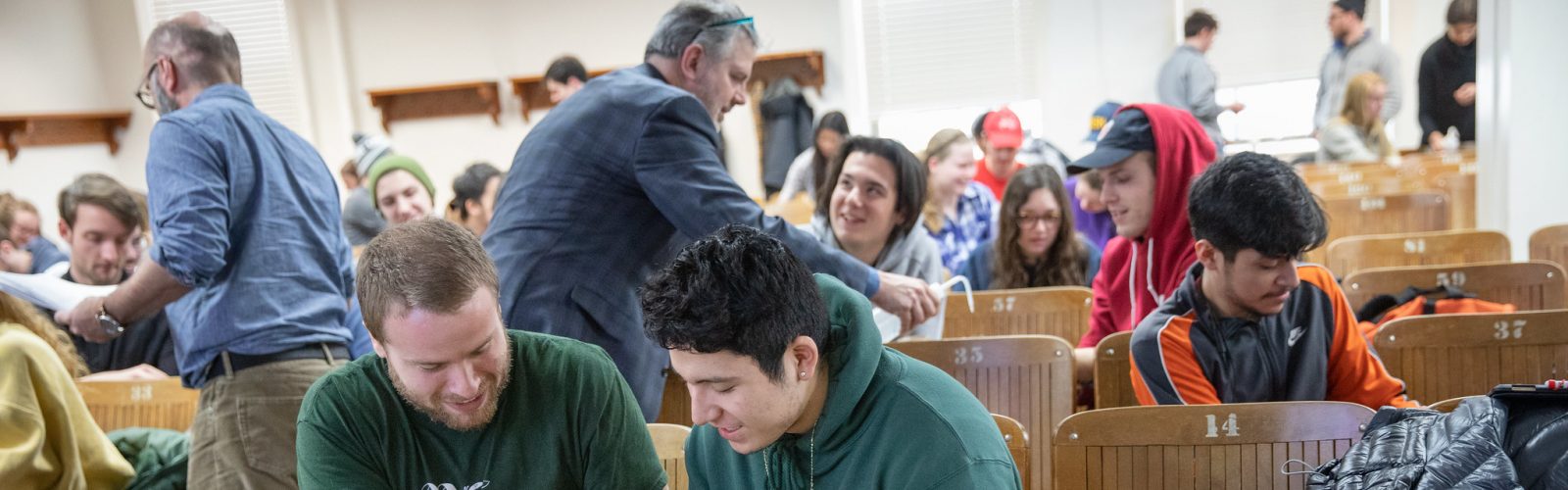
The philosophy I bring to teaching and learning focuses on the academic relationship that develops between instructor and student, whether it be in a classroom, lab, or in the field. The key word in my philosophy is relationship, as I strongly believe that in order for teaching and learning to be effective, an academic relationship based on mutual trust and respect must first be established. This relationship must recognize the different talents and interests students bring such that together all grow from the teaching-learning experience. The consequence of not recognizing this powerful foundation costs both students in learning, and instructors in effectiveness. Conversely, embracing this tenet can lead to the ultimate goal of active curiosity to question the answers. Then, learning becomes a life-long endeavor, free to make mistakes and ask questions – an endeavor where understanding becomes the focus and drive, not the path one takes to get there.
When I’m not reading or thinking about education, I actually practice the art of teaching and have loads of fun at it! I normally don’t use the word passion (too relative of a term for me), but the closest I come to using the term is when describing my love for the magic that occupies a classroom of curious minds! So first, I would like to extend a big thank you to all my students who give me this opportunity!!
In order to nurture this relationship, I adhere to 7 core beliefs in the courses I teach:
- Real learning comes from the empowerment of self discovery, where I function as a guide to remove barriers of comprehension and self-doubt;
- Learning is blind to diversity such that no student is denied the opportunity to take part regardless of race, gender, or religion;
- Each student brings a unique experience to the classroom that provides opportunities for the instructor to attach meaningful learning objectives;
- Each student brings a unique learning style to the classroom that is embraced and exploited, not conformed into the learning style most favored by the instructor;
- Students and instructors can learn more than we think and are capable of rising to measurable learning outcomes provided opportunities exist in a safe, trust-filled environment;
- The student is not a customer, as much as the instructor is not a retailer, but rather equals on a path to discovery and understanding;
- The learning process must embrace public and student feedback, such that evaluation is embraced to increase its effectiveness.
I currently teach 5 courses: 1 course in the fall semester, 2 courses in the spring, and 2 courses in the summer interim (one every other summer).
As reflected in my 60% teaching appointment, affiliations, and recognitions, I have a great interest in environmental education. This intentional emphasis is not limited to classroom instruction where I constantly experiment with methods to improve the teaching-learning process. It goes beyond knowledge transfer to educational research that examines the art and science of teaching and learning otherwise known as pedagogy. I have adopted a modified pedagogical approach inspired by M.B. Paulsen paper in 2001 (New Directions for Teaching and Learning) where I strive for “Pedagogical Content Knowledge”. In other words, I pursue educational research that is discipline-based and learner-focused.